

A low sperm count is one of the most common and most treatable causes of male infertility, and in many cases it can be improved or worked around once the underlying cause is identified. It does not mean a man cannot father a child — it means conception may take longer naturally, and a semen analysis followed by a focused evaluation is the fastest way to know what is actually causing it and what can be done.
What Counts as a Low Sperm Count?
A low sperm count, called oligospermia, generally means fewer than 15 million sperm per millilitre of semen, based on standard reference values. Counts below 5 million per millilitre are usually described as severe oligospermia, and a complete absence of sperm in the semen is called azoospermia — a different situation that needs its own dedicated evaluation.
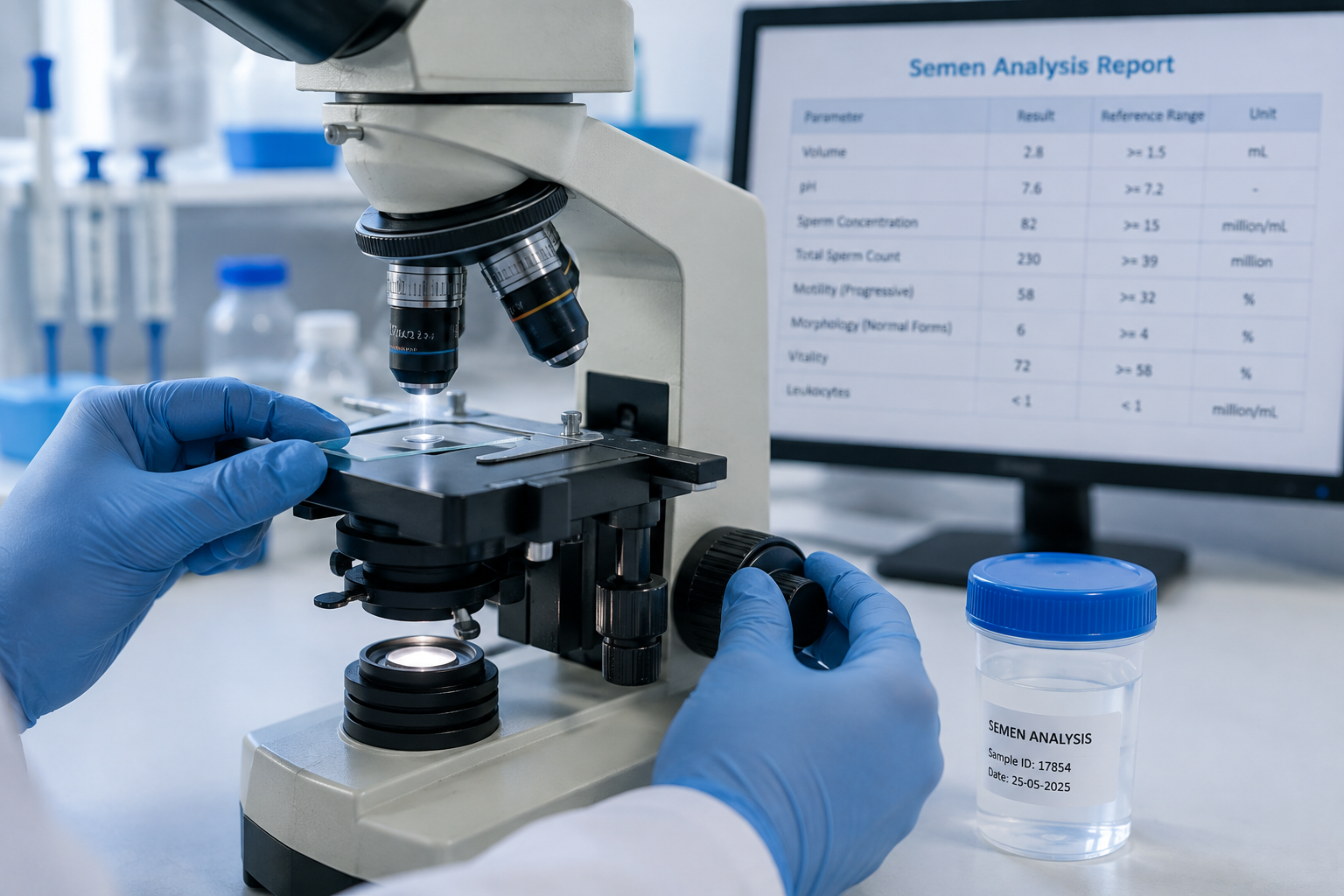
Sperm count is only one part of a semen analysis. Motility (how well sperm move) and morphology (their shape) are assessed alongside count, because a man can have a normal count with poor motility, or vice versa, and both affect the chance of natural conception.
Common Causes of Low Sperm Count
Low sperm count rarely has a single cause. It is usually the result of one or more of the following:
- Varicocele: An enlarged vein in the scrotum, present in a large share of men with low sperm count, and the most common surgically correctable cause.
- Hormonal imbalance: Low testosterone or other pituitary hormone problems can reduce sperm production even when the testicles themselves are otherwise healthy.
- Infections: Past or current infections of the epididymis, testicle, or prostate, including sexually transmitted infections, can affect sperm production or block the sperm pathway.
- Genetic conditions: Conditions such as Klinefelter syndrome or Y-chromosome microdeletions can reduce or eliminate sperm production, usually identified through genetic testing in more severe cases.
- Structural blockages: Blockage in the tubes that carry sperm, whether from infection, injury, or prior surgery such as a vasectomy, prevents sperm from reaching the semen.
- Undescended testicle history: A testicle that did not descend properly in childhood, even if corrected later, can affect long-term sperm production.
- Medical conditions: Diabetes, obesity, and certain autoimmune conditions are associated with lower sperm counts.
- Medications and treatments: Some blood pressure medicines, anabolic steroids, long-term opioid use, and cancer treatments like chemotherapy or radiation can reduce sperm count, sometimes temporarily.
- Ejaculatory problems: Retrograde ejaculation, where semen enters the bladder instead of exiting normally, can appear as a very low or absent sperm count on a standard semen sample.
Varicocele: The Most Common Correctable Cause
A varicocele is an enlargement of the veins that drain the testicle, similar to varicose veins elsewhere in the body, and it is found in a large proportion of men being evaluated for low sperm count. It is thought to reduce fertility by slightly raising the temperature around the testicle, which affects sperm production over time.
Not every varicocele needs surgery — many men have one without any effect on fertility. Repair (varicocelectomy) is generally considered when the varicocele is clinically significant, semen parameters are abnormal, and no other major cause explains the infertility. Semen quality improves in a majority of men after repair, though the improvement takes a few months since sperm take about three months to fully mature.
Lifestyle and Everyday Factors That Matter
Beyond medical causes, several everyday factors can lower sperm count, and these are worth addressing regardless of what the tests eventually show.
- Heat exposure: Frequent hot baths, saunas, laptops used directly on the lap, and occupations involving prolonged sitting or heat can raise scrotal temperature and affect sperm production.
- Tobacco and alcohol use: Both are consistently linked to lower sperm count and poorer sperm motility.
- Obesity: Excess body weight is associated with hormonal changes that reduce sperm production.
- Tight underwear and prolonged sitting: The evidence is mixed, but avoiding prolonged heat build-up is a reasonable, low-cost precaution.
- Anabolic steroid or testosterone supplement use: These can suppress the body's own sperm production, sometimes for many months after stopping.
- Chronic stress and poor sleep: Both affect the hormones that regulate sperm production, though they are rarely the sole cause.
When to Get Checked
The standard guidance is to seek evaluation after 12 months of trying to conceive naturally, or after 6 months if your partner is above 35. However, some situations call for earlier evaluation rather than waiting out the full year.
- Known history of varicocele, undescended testicle, or prior groin/scrotal surgery
- History of mumps after puberty or any testicular infection
- Very low libido, erectile difficulty, or reduced ejaculate volume alongside difficulty conceiving
- Known diabetes, thyroid disorder, or other hormonal condition
- Past chemotherapy, radiation, or long-term steroid use
- Partner's age above 35, where earlier evaluation is generally advised for both partners
Tests for Male Infertility
A structured work-up avoids guesswork and identifies whether the cause is hormonal, structural, genetic, or lifestyle-related.
- Semen analysis: Usually done twice to check sperm count, motility, morphology, volume, and pH.
- Hormone tests: Testosterone, FSH, LH, and sometimes prolactin and thyroid hormones to check whether the signal to produce sperm is intact.
- Scrotal ultrasound: Checks for varicocele, undescended testicle, cysts, or structural abnormalities.
- Post-ejaculatory urine test: Used when retrograde ejaculation is suspected.
- Genetic testing: Considered for severe oligospermia or azoospermia.
- Testicular biopsy: Used selectively in azoospermia to determine whether sperm production is occurring but blocked.
Treatment Options
Treatment is matched to the specific cause found on evaluation, not applied generically.
- Lifestyle correction: Reducing heat exposure, stopping tobacco and steroid use, weight management, and moderating alcohol.
- Treating infections: Antibiotics for active infection of the prostate, epididymis, or testicle, followed by a repeat semen analysis.
- Hormone therapy: Correcting an underlying hormonal imbalance when hormone tests show a treatable pattern.
- Varicocelectomy: Surgical repair of a significant varicocele when it is likely contributing to abnormal semen parameters.
- Correcting ejaculatory problems: Medication or procedural options depending on the cause.
- Surgical sperm retrieval: For blockages or azoospermia, sperm can sometimes be retrieved directly from the epididymis or testicle.
- Assisted reproductive techniques: Options such as IUI, IVF, or ICSI may be considered with a fertility specialist.
Can Low Sperm Count Improve Naturally?
In some men, yes — particularly when the cause is lifestyle-related, such as heat exposure, tobacco use, obesity, or a recent infection. Because it takes roughly three months for new sperm to fully mature, improvements from lifestyle changes or treatment are usually assessed with a repeat semen analysis after at least 8 to 12 weeks, not days or weeks.
In cases involving significant varicocele, genetic conditions, or blockage, lifestyle changes alone are unlikely to be enough, which is why identifying the actual cause through proper testing matters more than trying supplements or remedies without a diagnosis first.
When Should You See a Urologist?
You should see a urologist trained in male infertility if you have been trying to conceive for a year without success, or sooner if any of the earlier red flags apply, or if a semen analysis has already shown a low count.
Men searching for a male infertility specialist in Gurgaon, low sperm count treatment, or varicocele evaluation can consult Dr Vikram Barua Kaushik at Urowellness Clinic. Dr Vikram Urologist reviews semen analysis reports, hormone levels, scrotal ultrasound findings, and lifestyle factors together before recommending observation, medical treatment, or surgical correction.
- No conception after 12 months of trying, or 6 months if partner is above 35
- A semen analysis already showing low count, poor motility, or abnormal morphology
- Known or suspected varicocele
- History of undescended testicle, testicular injury, or infection
- Very low or absent ejaculate volume
- Plans for chemotherapy, radiation, or long-term steroid use where fertility preservation should be discussed first
The Takeaway
Low sperm count is common, usually has an identifiable cause, and is often treatable or manageable with the right approach — but it needs a semen analysis and focused evaluation rather than guesswork or unverified remedies. Whether the cause turns out to be a varicocele, a hormonal imbalance, an infection, or a lifestyle factor changes what actually helps.
If you and your partner have been trying to conceive without success, book a consultation with Dr Vikram Barua Kaushik at Urowellness Clinic to get a clear, test-based next step.
Resources
- Male InfertilityUrology Care Foundation
- Oligospermia (Low Sperm Count)Cleveland Clinic
 FAQs
FAQs